
Comparing Technological Adoption Barriers: Jacquard Loom, Telegraph, and Project Starline
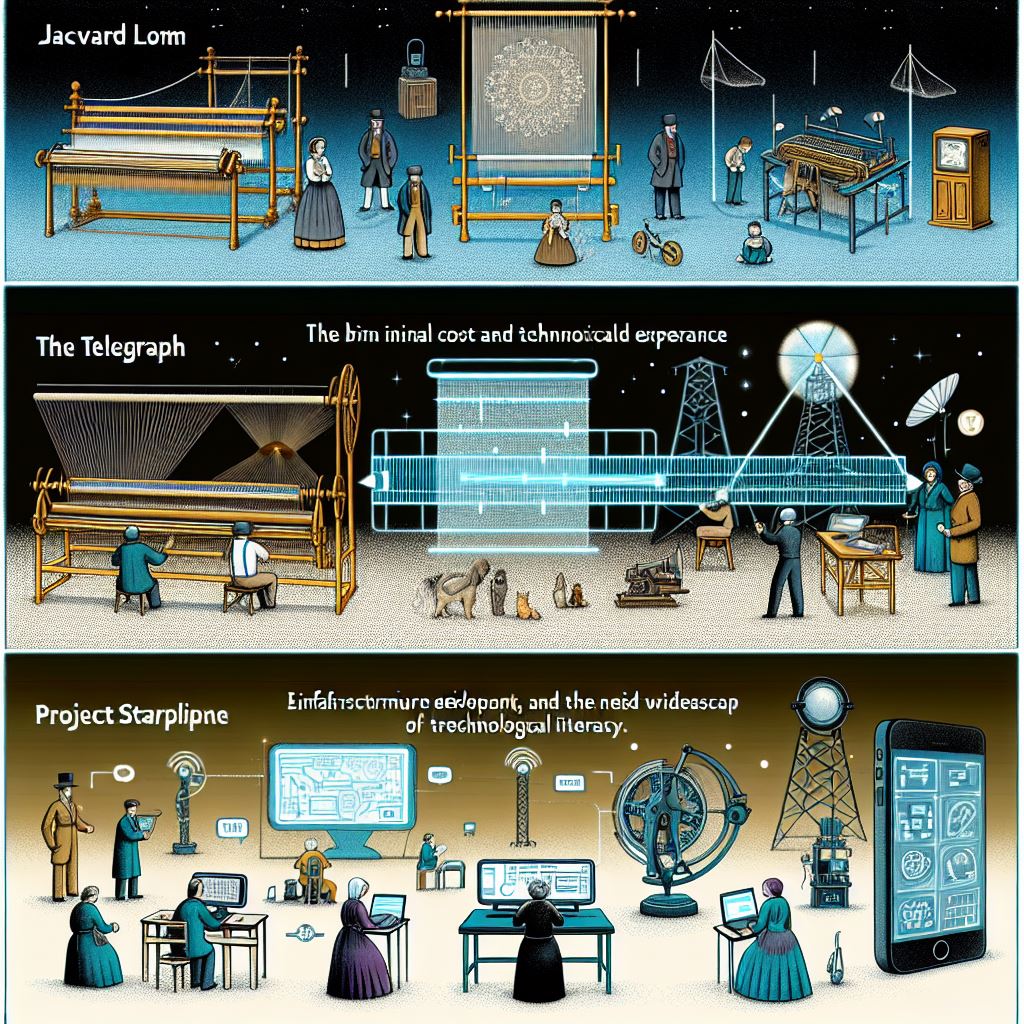
The Jacquard loom, invented in 1804, revolutionized textile weaving by automating the production of intricate patterns using punch cards. However, its adoption faced significant barriers:
- Labor Resistance: Skilled weavers saw the loom as a threat to their livelihoods, leading to violent protests and sabotage.
- Economic Concerns: The initial cost of the loom and the need for retraining workers posed financial challenges for manufacturers.
- Technological Skepticism: As with many new technologies, there was skepticism about its reliability and effectiveness.
The telegraph, developed in the 1830s and 1840s, transformed long-distance communication by transmitting electrical signals over wires. Its adoption barriers included:
- Infrastructure Costs: Building the extensive network of wires required significant investment.
- Technical Expertise: Operating the telegraph required specialized knowledge of Morse code, limiting its accessibility.
- Geographical Challenges: Laying telegraph lines across difficult terrains and vast distances was a logistical hurdle.
Project Starline, a recent collaboration between Google and HP, aims to create realistic 3D video calls, making remote communication feel like in-person interactions. The barriers to its adoption are:
- High Costs: The advanced hardware and software required for Project Starline make it expensive to implement.
- Technological Complexity: The need for specialized equipment and infrastructure may limit its widespread use.
- Market Readiness: Convincing businesses and consumers to adopt a new communication technology can be challenging, especially when existing solutions like Zoom and Google Meet are already well-established.
Comparison: The barriers to adoption for Project Starline are more akin to those faced by the telegraph. Both technologies require significant infrastructure investment and technical expertise, and they aim to revolutionize communication. In contrast, the Jacquard loom’s barriers were more related to labor resistance and economic concerns within a specific industry.
LLM Used: Microsoft Copilot (GPT-4) Date Generated: March 18, 2025
Prompt used: Compare the barriers to adoption for the Jacquard loom with the barriers to adoption of the telegraph. Are the barriers to adoption for Project Starline more like those for the Jacquard loom or those for the telegraph? Consider factors such as cost, accessibility, infrastructure, and societal impact